News, Information, Opportunities for Africans, all round solution, inspiring stories and articles etc.
Search This Blog
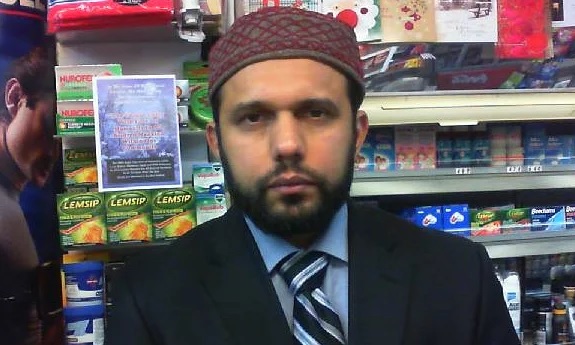
'Kill Ahmadis' hate group Khatme Nubuwwat must be banned - campaigners
Campaigners
have called on the Home Office to ban anti-Ahmadiyya group Khatme
Nubuwwat (KN), following the brutal murder of Ahmadi shopkeeper Asad
Shah in Glasgow.
From its UK headquarters in Forest Gate, East
London, Khatme Nubuwwat (KN) brands followers of the pacifist Ahmadiyya
Muslim movement as 'apostates', or those who have abandoned their
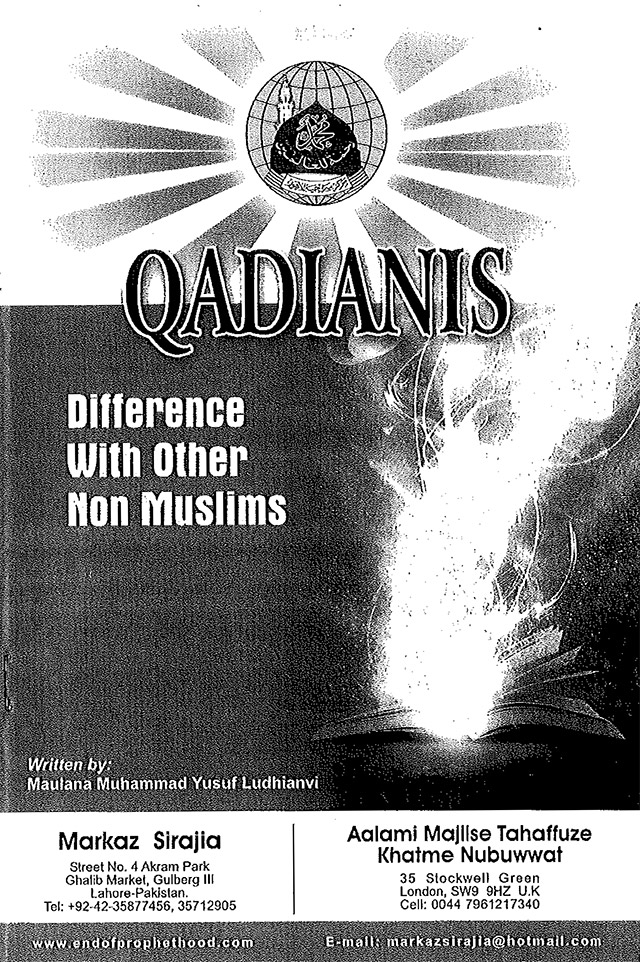
religion. It has also been alleged that KN has a base at Stockwell
Mosque, in South London. Its branches in countries around the world
allegedly disseminate a steady stream of sermons, leaflets and booklets
calling for Ahmadis to be ostracised by their fellow Muslims, and for
the execution of those who refuse to repent.
Akber Choudhry, a spokesman for the organisation, has told IBTimes UK
that the claims are a "vicious campaign to malign our organisation"
that aims "to counter the propaganda of the Ahmadiyya Qadiani [a
pejorative term for the Ahmadiyya] religion, and their proselytisation
among Muslim youth".
Last week, IBTimes UK exclusively reported
that leaflets calling for Ahmadis to be killed had been distributed in
several locations in London in recent years, including university
campuses. The leaflets are undersigned by a KN branch in Stockwell
Green, and were allegedly distributed outside the organisation's office
in Forest Gate. The group denies any connection with the production or
distribution of the leaflets.
On 7 April, Tanveer Ahmed confessed
to killing Shah and released a statement through his lawyers suggesting
Shah had been spreading false views of Islam. Campaigners claim that the time has come for authorities to act and stamp out anti-Ahmadiyya hate speech allegedly spread by KN.
"Our
position on this group is that it is extremely aggressively
anti-Ahmadiyya to the point where it promotes violence, and I think my
view and the view of Tell Mama would fall within the Home Office
brackets to ban," Fiyaz Mughal, director of anti-hate crime group Tell
Mama, told IBTimes UK.
In 2010, a Khatme Nubuwwat-affiliated
Islamic television station was punished by Ofcom after broadcasting
sermons in which Ahmadiyya were branded "liable for death". Hate speech
leaflets were also distributed in several locations in London the same
year, including Tooting, Streatham and Kingston, and preachers called
for Ahmadi businesses to be boycotted. However, the Crown Prosecution
Service declined to bring criminal charges against the group.
The
decision was criticised by Lord Avebury, former vice chairman of the
government's Parliamentary Human Rights Group, who said the decision
showed Britain's laws against inciting religious hatred were "not
effective". A persecuted minority?
Numerous
Ahmadis told IBTimes UK of continuing ostracisation and harassment,
with children rejected by their Muslim peers at schools, Ahmadi students
barred from taking part in joint events on the Muslim faith on
university campuses, and hate speech continuing to be distributed.
Safad Ahmed, a London-based activist, was motivated to start an online petition that has attracted more than 2,000 signatures when Ahmadi acquaintances were harassed. She wants authorities to investigate Khatme Nubuwwat with a view to banning it.
"They
have been able to get away with it with impunity for such a long time,
they just don't think it is going to be anything people are going to
remark on. That is the issue. These hate leaflets were reported to the
police previously but no action was taken," she told IBTimes UK.
"It
is an important issue now because the treatment of not just Ahmadis but
reformists or anyone who is not a certain type of political Islamist
Muslim within Muslim communities. The Islamists start on the minorities,
and people who say 'that is not fair' or 'that is not right' and then
it progresses."
Founded in British controlled India in the late
19th century, the Ahmadis take their name from founder Mirza Ghulam
Ahmad who died in 1908. Identifying itself as a Muslim movement and
following the teachings of the Koran, it believes the long-awaited
mahdi, or Muslim saviour, came in the form of a man named Ahmad.
However,
elements of mainstream Islam and orthodox Muslims in countries such as
Pakistan reject the notion of Ahmad as mahdi, and Ahmadis in general,
regarding the group as heretics and subjecting them to persecution in
Asian countries. UK
police have been accused of dismissing the issue as a community dispute
about rival interpretations of Islam. "A lot of people don't get what
the difference is, the sectarianism is something not a lot of people get
in this country," said Ahmed.The Metropolitan Police has not responded to requests for comment from IBTimes UK.
With
increasing concern about the growth of violent radicalisation in the
UK, campaigners argue that it is urgent to take action against groups
advocating violence against those whose interpretation of Islam diverges
from that of the hardliners.
"We are in a different scenario to
the one we were in six years ago, and the scenario then was we didn't
have Isis around. So given the Isis view on that kind of Takfiri
situation – who's a Muslim who's not a Muslim - this is a different
context. These leaflets need to be looked at in the context of the day,"
said Mughal.
Ahmed described Khatme Nubuwwat as being on the "same continuum" as violent jihadist groups such as Islamic State (Isis).
Khatme Nubuwwat has not responded to requests for comment. Home
Office spokesman Michael Charouneau said: "We do not routinely comment
on whether an organisation is or is not under consideration for
proscription," adding that the list of proscribed groups is under
"constant review".
A shell company registered in the British Virgin Islands was part of a 10-member consortium that bid unsuccessfully for the Pune Indian Premier League (IPL) team in 2010, according to reports. It is the first link to emerge between the cash-rich IPL and leaked documents from the Panamanian law firm Mossack Fonseca.
Yesterday, I was passively listening to a radio program when the presenter played a Christmas tune. Like a big joke, I suddenly began to realize that the year is as good as over. I still remember like it was yesterday when I was putting down my new year’s resolutions and my goals.
Comments
Post a Comment