News, Information, Opportunities for Africans, all round solution, inspiring stories and articles etc.
Search This Blog
What is post-Ebola syndrome and what symptoms do survivors share?
The
Ebola outbreak in West Africa has far-reaching consequences, with
thousands of survivors reporting long-lasting health problems. A
clinical team, from the University of Liverpool and the King's Sierra
Leone partnership, assessed the state of Ebola survivors, to understand
the symptoms they shared. More than 17,000 people
have survived the Ebola epidemics, including around 5,000 in Sierra
Leone. A year after being discharged from hospital care, many of them
suffer from a range of psychiatric, neurological, musculoskeletal and
visual complications. Together, these problems form what experts loosely
call the "post-Ebola syndrome" or PES.
In this particular study, the scientists focused on two aspects: psychiatric and neurological sequelae, and ocular problems.
Psychiatric and neurological consequences
To
better understand the broad-ranging psychiatric and neurological
symptoms of PES, the team examined more than 354 survivors discharged
from the Ebola Treatment Unit at the 34th Regiment Military Hospital in
Freetown, Sierra Leone. Based on notes from follow-up visits, the scientists identified 87 patients out of the 354 who showed significant symptoms of confusion, depression psychosis or appetite loss.
Thirty-eight were referred to a psychiatric clinic to complete
neurological and psychiatric examination, which included brain scans.
"We
found a broad set of neurological and psychiatric symptoms, from minor
to extremely severe, are present in Ebola survivors well over a year
after discharge from hospital. In our selected group, intermittent
headaches were the most frequent neurological feature, with a variety of
associated symptoms", explains Dr Patrick Howlett, from the King's Sierra Leone Partnership.
Headaches,
insomnias and depression were the most common psychiatric PES symptoms,
leading the team to conclude that it could be interesting to generalise
psychiatric referrals for survivors.
Ocular problems and vision impairment
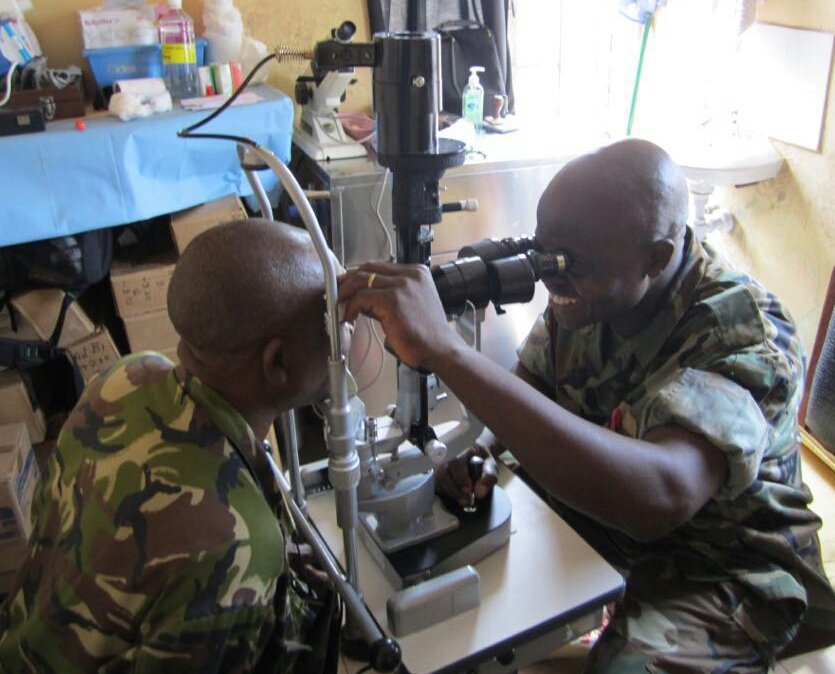
Ocular complications is a common symptom of PES as 150 Ebola survivors out of the 354 in Sierra Leone have already undergone different ophthalmic assessments after complaining of vision problems. Doctors discovered more ocular problems than previously reported by other studies. In
particular, they found cases of cataracts in young survivors. Cataracts
are usually age-related and cause the lens of the eye to become less
transparent, leading to a blurred vision. Chorioretinal scarring - a
pigment change located inside the surface of eye which can cause
decreased vision - was also reported.
"The data in both sets of
research supports the need for larger, case-controlled studies.
Post-Ebola syndrome is not going away and those with the condition
deserve better treatment, so we will continue to research and provide
hands on support to ensure this happens," says Dr Janet Scott, one of
the doctors responsible for the whole study. Other key findings will be presented during the European Congress of Clinical Microbiology and Infectious Diseases this week, with the goal of improving treatment and follow-up of Ebola survivors.
It said Daljinder Kaur gave birth to a baby boy at a fertility clinic in the northern Indian state of Haryana, following two years of in vitro fertilisation (IVF) treatment. The report noted that though Kaur doesn’t possess any official paper to justify her age, but doctors at the hospital have registered her age as 72 years. It noted that if Kaur’s age is correct, that makes her one of the world’s oldest woman to become mother.
I believe that we were all sent here for a reason and that we all have significance in the world. I genuinely feel that we are all blessed with unique gifts. The expression of our gifts contributes to a cause greater than us.
The son of former Nigerian military head of state Yakubu Gowon is due to return to Nigeria after spending 22 years in a US prison after being convicted on drug-related charges. It is believed Musa Gowon was released from the Taft Correctional Facility Bakersfield, California, after US President Barack Obama granted him pardon earlier in November.

Comments
Post a Comment