News, Information, Opportunities for Africans, all round solution, inspiring stories and articles etc.
Search This Blog
World Haemophilia Day 2016: Contaminated blood scandal one of the biggest NHS treatment disasters
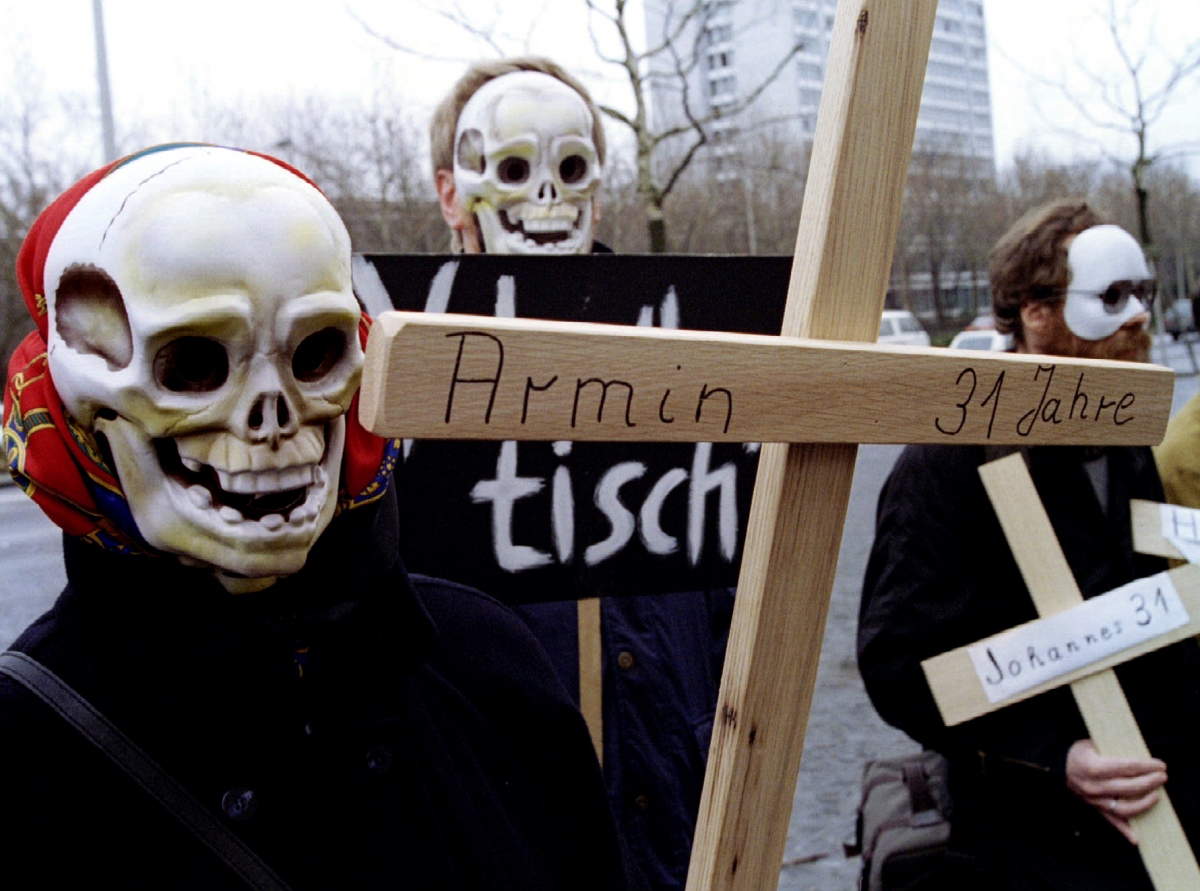
Relatives
of haemophiliacs who died after receiving blood transfusions
contaminated with the AIDS virus demonstrate near the German parliament
The
fountains in Trafalgar Square in London's West End are set to glow red
on Sunday 17 April to raise awareness for World Haemophilia day, a rare
blood condition. This is also a clarion call to remember the so-called
'tainted blood scandal' in the 1970s and 1980s when around 5,000 people contracted HIV and Hepatitis C during treatment for haemophilia or blood transfusion by the NHS.
In
acknowledgement of this, the Haemophilia Society recently launched a
social media campaign to highlight that those affected by the
#ContaminatedBlood scandal. The victims of the contaminated blood
scandal demonstrated outside Parliament on 12 April as MPs debated the
issue. Politicians are asking the government to recognise the
contaminated blood scandal as one of the biggest treatment disasters in
the history of the NHS.
The
debate will call for the government to recognise some victims in
England will be left worse-off under the proposed reforms and that key
groups who have been affected by the scandal, such as widows and
children of the dead, have been left out of the payout plans altogether. Sue Threakall, of the campaign group Tainted Blood, told the Newham Recorder: "The reaction to the consultation has been one of dumb despair even among seasoned campaigners.
"There's
absolute shock that a government that has been working with us and
seemed to think they could get it right has got it so catastrophically
wrong.
"It needs to go back to the drawing board. The government
needs to say we got it wrong and we're going to revisit this - not in
six months or 12 months but now."
Among the campaigners who joined
the protest on 12 April were two women whose husbands both died as a
result of the contaminated blood scandal. Ron Hill died in 2004 after
being given blood infected with Hepatitis C during his NHS treatment for
a clotting disorder, according to ITV.
Sue Threakell was joined by her local MP for Barnstaple at the
demonstration. Her husband died to due contracting HIV after he was
given contaminated blood.
Campaigners are fighting for a
financial settlement from the Government, with MPs criticising delays in
implementing a £100 million compensation scheme which campaigners argue
will leave some people worse off.
Despite warnings, the UK
purchased haemophilia treatment from foreign high-risk paid donors. As
part of the contaminated blood scandal, haemophilia patients received
blood products carrying almost 6 times more risk of HIV infection and
close to 100% chance of infection with Hepatitis C. Around 2,400 died as
a result of the contaminated blood.
As part of the newly proposed
reforms by the Government, support to the majority of the community
would decrease by up to 30%. People in England stand to be worse off
than they currently are and receive less support than in Scotland where
when a haemophilia patient infected with contaminated blood dies, their
spouse or civil partner will continue to receive 75% of their annual
payment.
What caused the tainted blood?
The infections
were allegedly due to plasma products such as Factor VIII that were
sourced from the United States from large groups of donors who were
sometimes paid for their donation. A documentary by investigative
journalist Kelly Duda, Factor 8: The Arkansas Prison Blood Scandal alleges
that for more than 20 years, the Arkansas prison system benefitted from
selling blood plasma from prisoners infected with viral hepatitis and AIDS.
In
the UK, no government, health or organisation has admitted liability
for the scandal and no compensation has been paid to those affected. An
independent inquiry into Contaminated Blood and Blood Products, chaired
by Baron Archer of Sandwell, was set up to uncover the causes of the
events that led to thousands of infections and deaths. Lord Robert
Winston described it as "the worst treatment disaster in the history of
the National Health Service".
What is haemophilia?
The
condition is a hereditary genetic disorder that impairs the body from
controlling blood clotting. Haemophilia A is a bleeding disorder where a
protein made by the body to help make blood clot is either partly or
completely missing, according to the Haemophilia Society. This protein is called a clotting factor: with haemophilia A there is a deficiency of clotting factor VIII (eight).
In around two thirds of cases there is a family medical history of haemophilia and
mainly affects boys and men. Women can be 'carriers' of the affected
gene and may experience symptoms. Although it is the most common type of
haemophilia it is a rare condition, affecting about one in every 10,000
males.
Haemophilia A is classed as mild, moderate or severe, depending on the level of clotting factor VIII in the blood. The
main symptoms are a tendency to bruise easily especially in childhood; a
tendency to bleed into joints and muscles causing pain, swelling and
impairment of movement. Bleeding episodes must be treated promptly to
avoid lasting effects.
It is treated by replacing the
missing clotting factor VIII in the blood through an intravenous
infusion of clotting factor concentrate. In the UK most people with
haemophilia A are treated with manufactured clotting factor concentrate
(recombinant) although it can be made from human blood plasma as well
(plasma derived). With the proper treatment people with
haemophilia A can lead long and functioning lives. However, there is
currently no cure for haemophilia A.
With haemophilia B,
there is a deficiency of clotting factor IX (nine) and around two thirds
have a family history of the disorder whilst in the rest it is a new
case. Haemophilia B mainly affects boys and men; women can be
'carriers' of the affected gene and may experience symptoms. Only about
20% of people with haemophilia have haemophilia B, so it is a rare
condition, affecting about one in every 50,000 males.
It said Daljinder Kaur gave birth to a baby boy at a fertility clinic in the northern Indian state of Haryana, following two years of in vitro fertilisation (IVF) treatment. The report noted that though Kaur doesn’t possess any official paper to justify her age, but doctors at the hospital have registered her age as 72 years. It noted that if Kaur’s age is correct, that makes her one of the world’s oldest woman to become mother.
I believe that we were all sent here for a reason and that we all have significance in the world. I genuinely feel that we are all blessed with unique gifts. The expression of our gifts contributes to a cause greater than us.
The son of former Nigerian military head of state Yakubu Gowon is due to return to Nigeria after spending 22 years in a US prison after being convicted on drug-related charges. It is believed Musa Gowon was released from the Taft Correctional Facility Bakersfield, California, after US President Barack Obama granted him pardon earlier in November.
Comments
Post a Comment