News, Information, Opportunities for Africans, all round solution, inspiring stories and articles etc.
Search This Blog
2007 OR10: Unnamed dwarf planet at far reaches of solar system is much bigger than thought
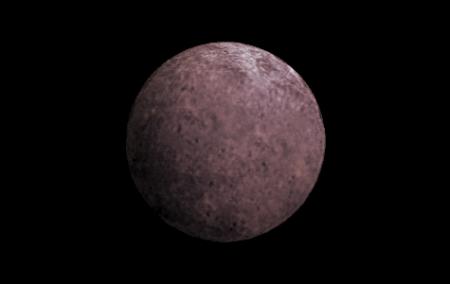
Artist impression of 2007 OR1NASA
A dwarf planet
at the far reaches of the solar system has become the biggest unnamed
object orbiting our Sun. Revised measurements of 2007 OR10 revealed it
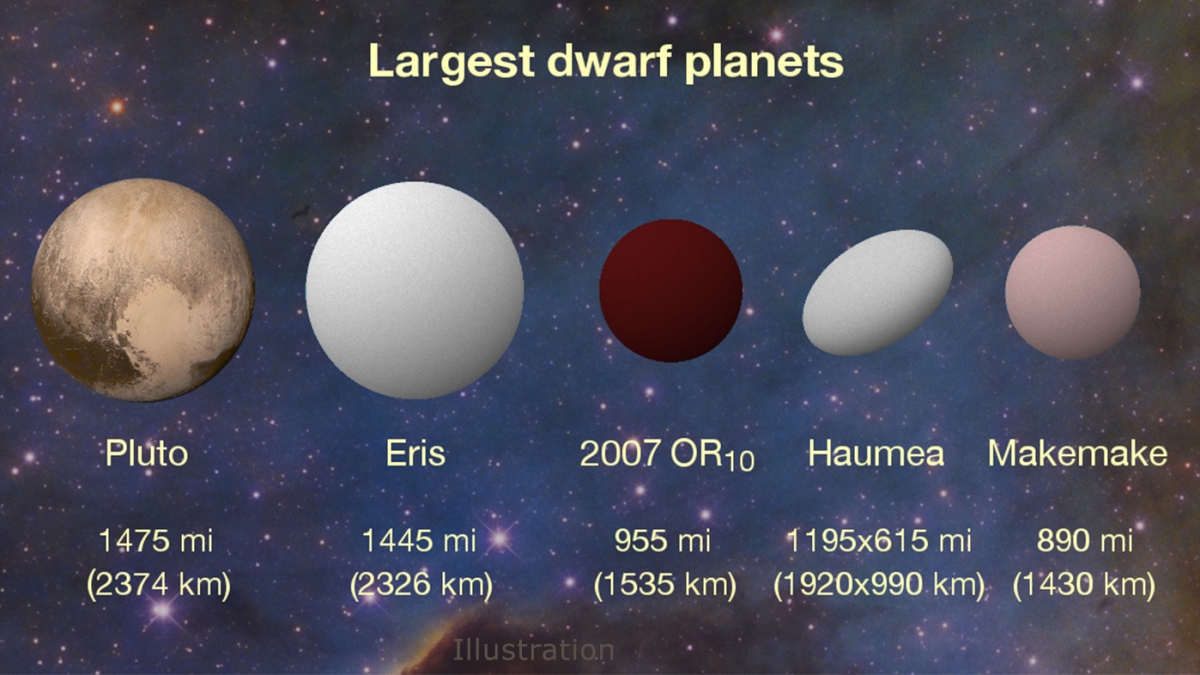
has a diameter of 955 miles (1,535km) – 155 miles (250km) bigger than
previous estimates. This makes it the third biggest dwarf planet in the
solar system – and the largest without a name.
2007 OR10 was
discovered almost a decade ago. It is the third farthest object in the
solar system, with only Eris and V774104 exceeding it. Because these
objects are so distant, small and cold, they are very difficult to
observe, meaning details about their basic properties, like their size,
are not well known.
To
better understand 2007 OR10, an international team of scientists
combined data from Nasa's Kepler space telescope and the ESA's Herschel
Space Observatory. Using Kepler, researchers were able to ascertain 2007
OR10 has a very slow rotation, taking almost 45 hours to spin.
Understanding
the dwarf planet's rotation period meant researchers could build better
models of it. They combined data on the fraction of sunlight reflected
from Kepler and how much sunlight was absorbed and radiated back with
Herschel. Taken together, the team was able to make a more accurate measurement of the dwarf planet's size. The results, published in The Astronomical Journal,
showed it had a diameter of 955 miles – much larger than the previous
estimate of 795 miles. This also makes it 60 miles (in diameter) larger
than the next biggest dwarf planet, Makemake.
The larger size also
means 2007 OR10 probably has a very dark surface (unlike most dwarf
planets) because of how much light is reflected. Research leader András
Pál, from the Konkoly Observatory in Budapest, said: "Our revised larger
size for 2007 OR10 makes it increasingly likely the planet is covered
in volatile ices of methane, carbon monoxide and nitrogen, which would
be easily lost to space by a smaller object. It's thrilling to tease out
details like this about a distant, new world – especially since it has
such an exceptionally dark and reddish surface for its size." The
task of finally giving 2007 OR10 a name is now under way. This decision
will be left to astronomers Meg Schwamb, Mike Brown and David
Rabinowitz who discovered the dwarf planet. But at the moment, they are
still deliberating.
Schwamb said: "The names of Pluto-sized bodies
each tell a story about the characteristics of their respective
objects. In the past, we haven't known enough about 2007 OR10 to give it
a name that would do it justice. I think we're coming to a point where
we can give 2007 OR10 its rightful name."
It said Daljinder Kaur gave birth to a baby boy at a fertility clinic in the northern Indian state of Haryana, following two years of in vitro fertilisation (IVF) treatment. The report noted that though Kaur doesn’t possess any official paper to justify her age, but doctors at the hospital have registered her age as 72 years. It noted that if Kaur’s age is correct, that makes her one of the world’s oldest woman to become mother.
I believe that we were all sent here for a reason and that we all have significance in the world. I genuinely feel that we are all blessed with unique gifts. The expression of our gifts contributes to a cause greater than us.
The son of former Nigerian military head of state Yakubu Gowon is due to return to Nigeria after spending 22 years in a US prison after being convicted on drug-related charges. It is believed Musa Gowon was released from the Taft Correctional Facility Bakersfield, California, after US President Barack Obama granted him pardon earlier in November.
Comments
Post a Comment